




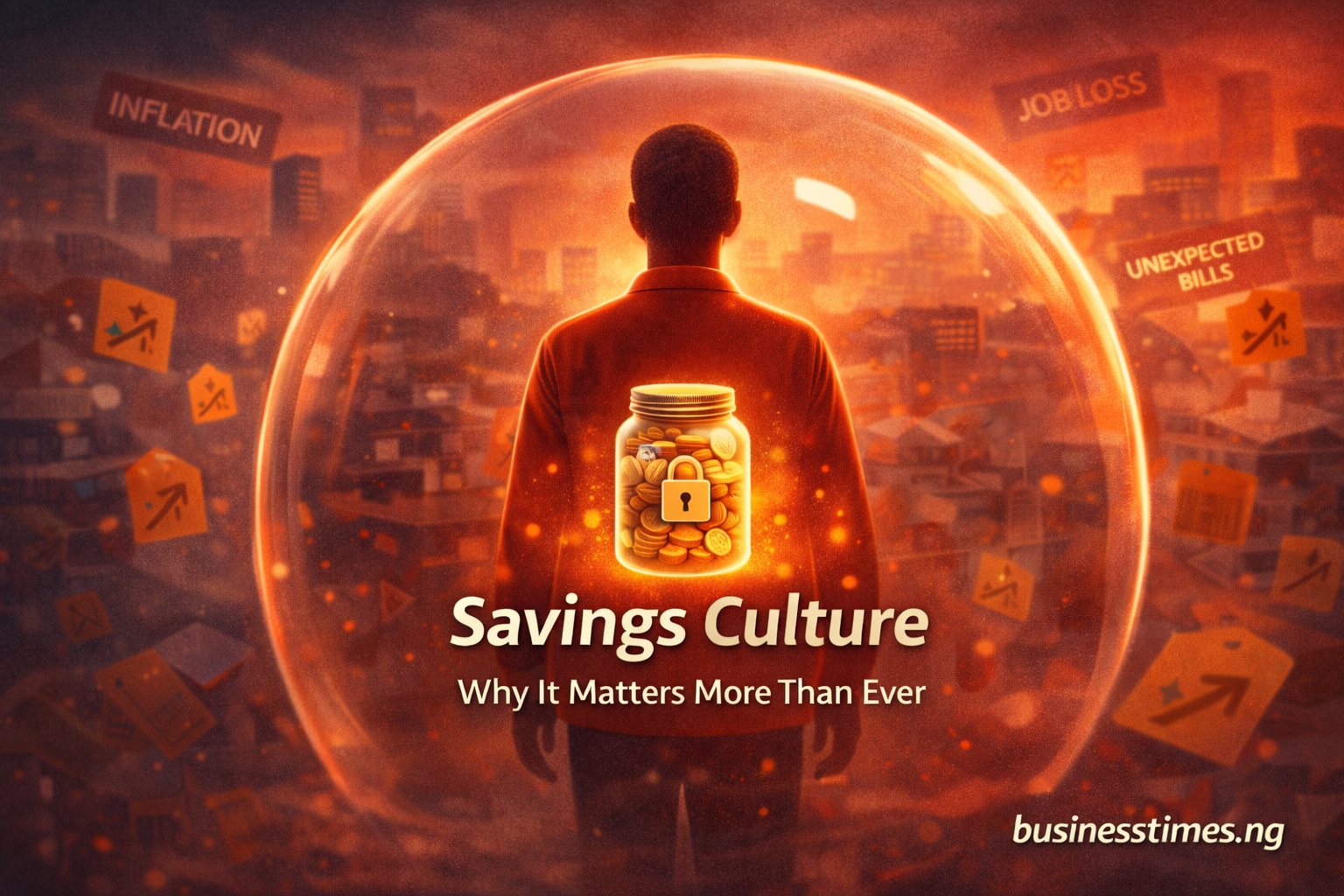
Nigeria’s savings culture has weakened significantly over the years, leaving individuals and small businesses dangerously exposed to economic shocks. With rising inflation, unstable incomes, and increasing living costs, many Nigerians now see saving as a luxury rather than a necessity. Yet, in an economy as volatile as Nigeria’s, saving is not optional – it is survival.
This year presents a critical moment for Nigerians to rethink how they earn, spend, and save money, because the consequences of poor savings habits are becoming harder to ignore.
The Reality of Saving in Today’s Nigeria
For the average Nigerian, income barely lasts until the next payday. Rent, food, transportation, electricity, school fees, data, and unexpected levies consume earnings almost immediately. As a result, many people operate a hand-to-mouth lifestyle, where nothing is set aside for emergencies or future plans.
Small and medium-sized businesses (SMEs) face similar struggles. Many business owners reinvest every naira back into daily operations, leaving no buffer for downturns, equipment failure, or delayed payments from customers.
This fragile financial position explains why:
- Medical emergencies quickly turn into debt crises
- Job losses lead to total financial collapse
- Small businesses shut down suddenly at the slightest disruption
A weak savings habit keeps people permanently vulnerable.
Why Nigeria’s Savings Culture Is Weak
Several factors have contributed to the erosion of Nigeria’s savings culture.
First is inflation. When prices rise faster than income, saving feels pointless. Many Nigerians believe that money saved today will lose value tomorrow, so they prefer to spend immediately.
Second is income instability. A large portion of the workforce depends on informal jobs, freelance work, commissions, or daily sales. Without predictable income, long-term financial planning becomes difficult.
Third is social pressure. Cultural expectations around financial support for family, social events, and community obligations often discourage disciplined saving. Saying “no” to requests can feel uncomfortable, even when personal finances are stretched.
Lastly, there is low financial education. Many people were never taught how to budget, save, or build financial resilience. As a result, saving is seen as something only “rich people” do.
How Inflation Is Damaging Savings Culture
Inflation has become one of the biggest enemies of disciplined saving in Nigeria. Rising food prices, transportation costs, rent increases, and energy expenses eat deeply into household income.
However, inflation should actually make saving more important, not less.
When prices rise:
- Emergencies become more expensive
- Borrowing becomes riskier due to higher interest rates
- Dependence on loans increases
Without savings, people are forced to borrow at high costs, sell assets cheaply, or rely on others during crises. This creates a cycle of financial stress that is difficult to escape.
Saving may feel harder during inflationary periods, but not saving is far more dangerous.
Why Saving Is Not About Amount, But Consistency
One common misconception is that saving only matters if the amount is “significant.” This belief discourages many Nigerians from even starting.
In reality, savings are built through consistency, not size.
Saving ₦1,000 daily or ₦10,000 monthly may seem small, but over time it creates:
- Emergency protection
- Psychological confidence
- Financial discipline
More importantly, saving builds the habit of delayed gratification, which is essential for long-term financial stability.
How Poor Savings Affect Small Businesses
For SMEs, weak savings habits often lead to business failure. Many entrepreneurs mix personal and business finances, spend profits immediately, and operate without reserve funds.
When challenges arise – such as:
- Reduced customer demand
- Supply chain disruptions
- Power or fuel cost increases
– businesses without savings struggle to survive.
Savings allow businesses to:
- Absorb short-term losses
- Invest strategically during downturns
- Avoid panic borrowing
Without savings, even profitable businesses remain fragile.
Rebuilding a Strong Savings Culture This Year
Improving Nigeria’s savings culture requires intentional effort at both individual and business levels.
First, Nigerians must redefine saving as a basic financial responsibility, not a luxury. Saving should come before discretionary spending, not after.
Second, budgeting must become non-negotiable. Tracking income and expenses reveals wasteful spending patterns and creates room for saving, even in tight budgets.
Third, individuals and SMEs should embrace automated or structured saving methods, such as:
- Standing orders
- Cooperative savings
- Digital savings platforms
These reduce the temptation to spend money meant for saving.
Finally, financial education must improve. Understanding money management, inflation, and long-term planning empowers people to make better financial decisions.
Looking Ahead
Nigeria’s economy remains unpredictable, and uncertainty is likely to persist in the near future. In such an environment, a strong savings habit is one of the most powerful tools individuals and businesses can use to protect themselves.
Improving the savings culture will not eliminate financial challenges overnight, but it will reduce vulnerability, increase resilience, and create a stronger foundation for growth.
This year, saving should no longer be an afterthought – it should be a priority.
By: Nelly Nathan