




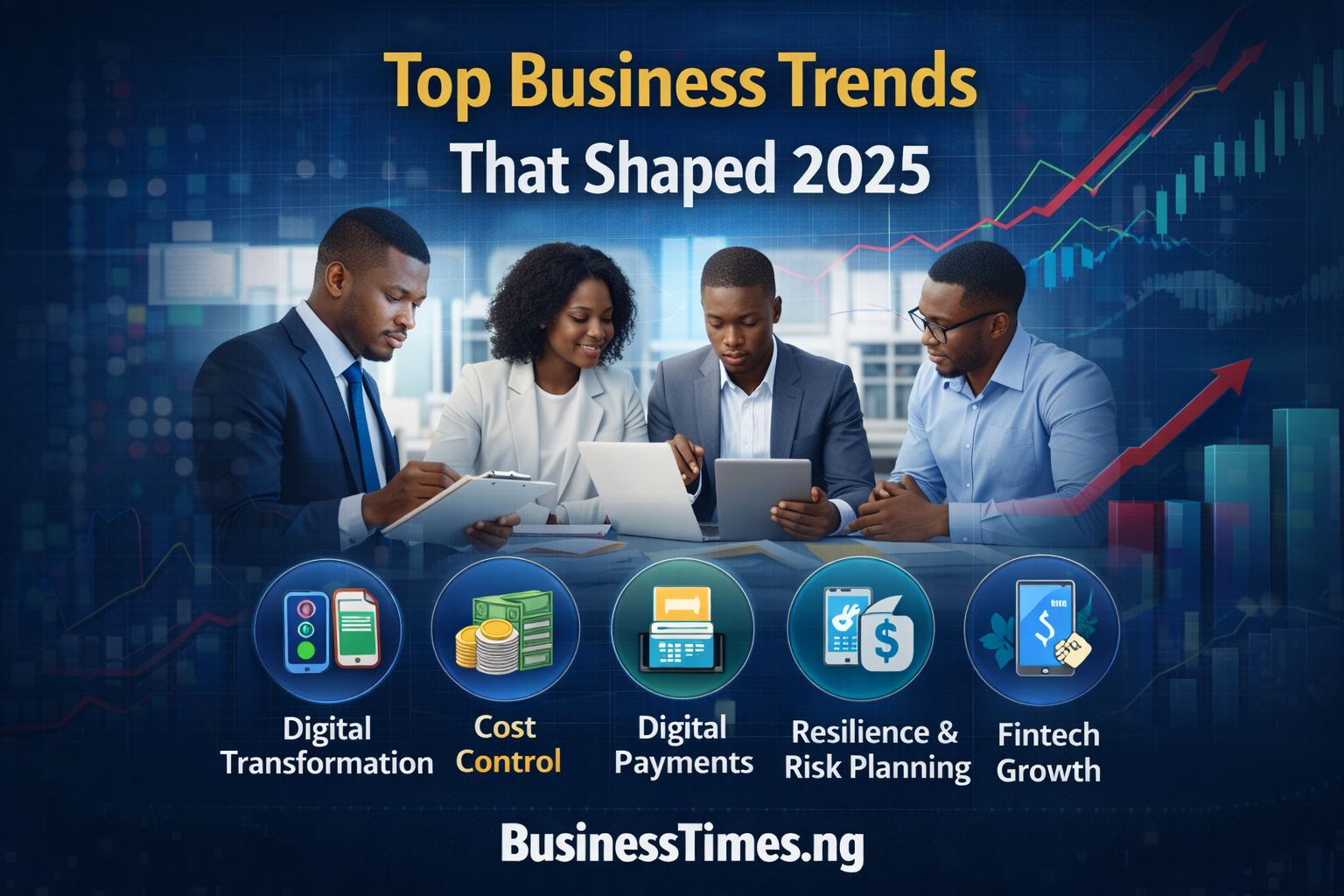
The year 2025 will be remembered as a turning point for Nigerian enterprises. Business Trends 2025 revealed how companies adapted to inflation, policy shifts, digital disruption, and changing consumer behavior. From small businesses to large corporations, survival depended less on size and more on agility, innovation, and financial discipline. This article breaks down the most important trends that shaped Nigerian business in 2025, explained in clear, everyday language.
1. Business Trends 2025: Digital Transformation Became Non-Negotiable
One of the clearest Business Trends 2025 showed was that digital adoption moved from “optional” to “essential.”
- SMEs embraced WhatsApp Business, Instagram Shops, and online payment links
- Corporates invested heavily in automation and data analytics
- Cashless payments expanded beyond urban centers
Businesses that failed to digitize lost customers, visibility, and speed.
2. Business Trends 2025 Highlighted Cost Control as a Survival Skill
With inflation squeezing purchasing power, Business Trends 2025 revealed a major shift toward lean operations.
- Companies reduced overhead costs
- Remote and hybrid work models became more accepted
- Businesses renegotiated supplier contracts
Profitability was no longer about high sales alone but about smart spending.
3. Business Trends 2025 Reflected Changing Consumer Behavior
Consumers became more intentional in 2025. This shift forced companies to rethink pricing and value.
Key changes included:
- Preference for essential goods over luxury items
- Increased demand for discounts, bundles, and flexible pricing
- Greater trust in brands that communicate transparently
Businesses that listened to customers stayed relevant.
4. SMEs Emerged as Stronger Economic Drivers
Small and medium-sized enterprises dominated conversations in Business Trends 2025.
- SMEs led job creation
- Informal businesses became more structured
- Government and private-sector support programs expanded
Entrepreneurship was no longer just about hustle; it became about structure and compliance.
5. Fintech and Digital Payments Expanded Further
Another defining moment was fintech’s continued influence.
- Digital wallets replaced traditional banking for many
- Payment speed became a competitive advantage
- Businesses demanded better transaction transparency
Fintech platforms bridged gaps where traditional banking struggled.
6. Resilience and Risk Planning Took Centre Stage
Businesses learned hard lessons in 2025. One major takeaway was preparedness.
- Emergency funds became a priority
- Supply chain diversification increased
- Businesses planned for currency and policy shocks
Resilience replaced blind optimism.
7. Branding, Trust, and Customer Experience Gained Priority
Trust emerged as currency as branding went beyond logos.
- Businesses communicated values clearly
- Customer experience mattered more than aggressive marketing
- Reputation influenced purchasing decisions
Trust-driven brands earned loyalty even during economic strain.
8. Partnerships Replaced Solo Competition
Strategic collaborations stood out in.
- SMEs partnered to share logistics and marketing costs
- Corporates collaborated with startups for innovation
- Industry alliances gained importance
Growth increasingly came through cooperation, not isolation.
What Business Trends 2025 Means for 2026
The lessons from Business Trends 2025 will shape 2026 and beyond. Businesses entering the new year must:
- Stay digitally visible
- Prioritize financial discipline
- Build resilient systems
- Understand evolving consumer needs
The era of “business as usual” is over.
Final Thought
Business Trends 2025 exposed weaknesses but also revealed opportunities. Nigerian businesses that adapted survived – and many thrived. As the economy evolves, the ability to learn from 2025 will separate struggling enterprises from sustainable ones.
By: Nelly Nathan