



The Christmas economy in Nigeria plays a crucial role in shaping business activity during the festive season. From retail shops to informal markets, the surge in consumer spending during Christmas has significant effects on commerce, employment, and economic growth across the country.
The Christmas economy is not just about what people buy, it is about what temporarily stops, what slows down, and what resumes with renewed intensity afterward.
Christmas Economy as a National Commercial Pause
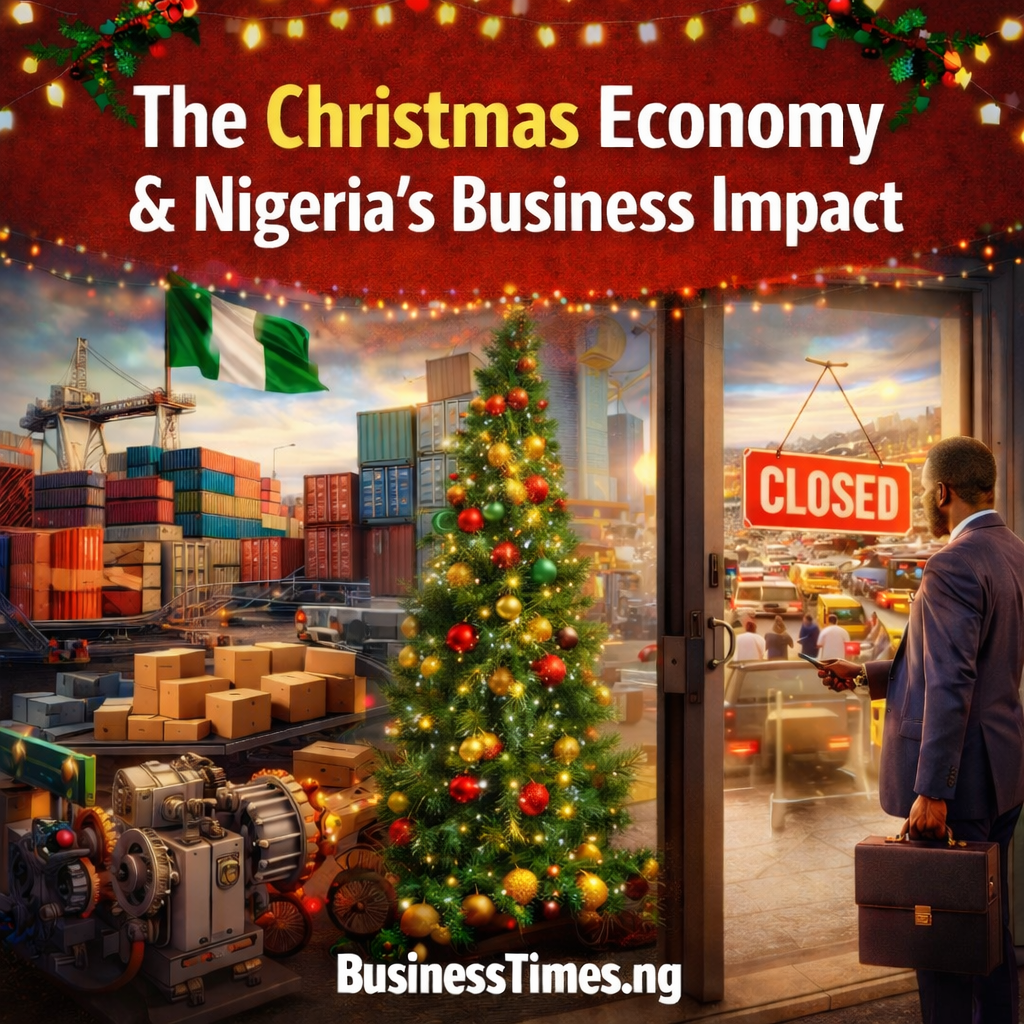
On December 25, Nigeria experiences one of its rare near-total commercial slowdowns. Banks close, ports reduce activity, factories scale down operations, and many offices shut their doors.
This pause affects:
- Import and export processing
- Manufacturing output schedules
- Interbank transactions
- Public-sector linked businesses
For businesses that rely on daily operations, Christmas Day becomes a planning checkpoint rather than a profit day. The Christmas economy therefore functions as a national reset moment within the commercial calendar.
How Supply Chains Adjust Around Christmas Day
Rather than operating normally, most supply chains work around Christmas Day. Goods are moved earlier, warehouses stock up ahead of time, and logistics companies adjust delivery timelines.
This adjustment affects:
- Inventory management
- Pricing stability
- Transport availability
- Fuel consumption patterns
In many cases, delays around Christmas lead to temporary scarcity, pushing prices upward before the holiday and correcting afterward. This pattern is a defining feature of Nigeria’s Christmas economy.
Christmas Economy and Informal Business Strategy
While formal businesses slow down, informal operators adapt differently. Roadside traders, food sellers, and service providers often operate selectively, targeting high-demand locations such as highways, churches, and event centres.
For informal businesses, Christmas Day is not about volume, it is about precision:
- Short trading windows
- Location-based sales
- Fast-moving items
This adaptive behavior shows how the Christmas economy rewards flexibility over scale.
Labour, Productivity, and Seasonal Decision-Making
Christmas Day also affects labour patterns. Temporary shutdowns give workers rest but reduce productivity in time-sensitive sectors. Some businesses shut fully, others operate skeletal shifts.
These decisions influence:
- Wage structures
- Overtime planning
- Contract staffing
- Post-holiday productivity levels
For employers, the Christmas economy is a test of balance between human needs and business continuity.
The Post-Christmas Economic Surge
One of the most important impacts of Christmas Day is what happens after it. December 26 often marks a sharp return to activity as:
- Travel resumes
- Businesses reopen
- Deferred transactions are completed
- New-year planning begins
This rebound effect is part of the Christmas economy, proving that the holiday does not halt commerce, it rearranges it.
Why the Christmas Economy Matters to Business Planning
Understanding the Christmas economy helps Nigerian businesses:
- Plan inventory and staffing better
- Avoid unnecessary downtime losses
- Manage customer expectations
- Prepare for January market realities
Christmas Day is not just symbolic. It is an economic signal – one that reflects how deeply culture shapes commerce in Nigeria.
The Christmas economy significantly influences Nigerian commerce, shaping both consumer behavior and business operations. As businesses navigate temporary closures and altered work schedules, they must adapt to the ensuing post-Christmas surge that rapidly revitalizes market activity. This dynamic illustrates the importance of integrating cultural insights into economic strategies, ensuring that businesses are well-positioned to capitalize on the festive season’s impact. Recognizing the Christmas economy as a key factor in business planning allows companies to harmonize cultural traditions with commercial objectives.
The festive season also encourages innovation in marketing strategies, as brands seek to resonate with the spirit of Christmas. Companies often introduce limited-time offers and themed products to attract consumers looking for gifts and celebrations. This period presents an opportunity for local artisans and small businesses to showcase their unique creations, further enriching the marketplace. As families gather and share experiences, the demand for goods and services expands, highlighting the interconnectedness of community and commerce during this time. Ultimately, the Christmas economy serves as a catalyst for growth, fostering a sense of unity and shared purpose among consumers and businesses alike.
By: Nelly Nathan