


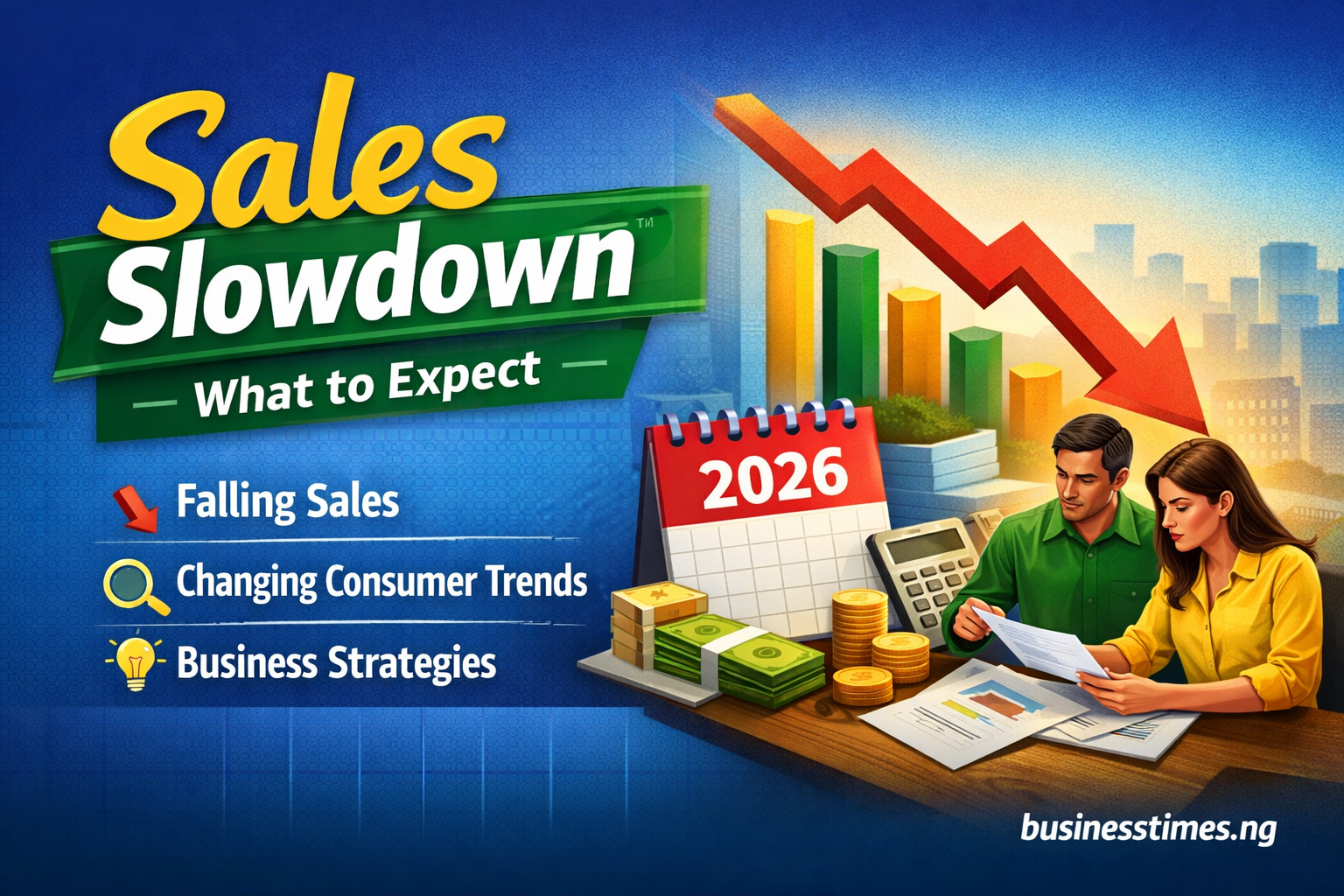
A sales slowdown is one of the most unsettling phases for any business. Orders reduce, customer enquiries slow down, and revenue projections suddenly feel uncertain. Across Nigeria, many businesses experience this dip after high-spending periods or during times of economic pressure.
Understanding what a sales slowdown means, why it happens, and what typically follows can help business owners make smarter decisions instead of reacting out of fear.
This article explains, in simple terms, what to expect during a sales slowdown and how businesses can stay steady through it.
What a Sales Slowdown Really Means
A sales slowdown does not automatically mean business failure. It simply refers to a period when sales growth weakens or declines compared to previous months.
This can show up as:
- Fewer customer purchases
- Reduced foot traffic or online orders
- Longer sales cycles
- Customers postponing buying decisions
For many Nigerian businesses, this phase is seasonal, while for others, it is linked to economic realities such as inflation, rising costs, or reduced disposable income.
Why Sales Slowdown Happens After Peak Periods
Sales usually peak during festive seasons, promotional periods, or times of increased consumer confidence. Once that window closes, spending behavior naturally adjusts.
Common reasons include:
- Consumers recovering financially after heavy spending
- Households prioritising essentials over discretionary items
- Businesses facing tighter budgets
- Increased price sensitivity among buyers
A sales slowdown is often less about your product failing and more about customers becoming cautious.
Sales Slowdown and Changing Consumer Behavior
One clear pattern during a sales slowdown is a shift in how customers think and buy.
Customers begin to:
- Compare prices more aggressively
- Delay non-essential purchases
- Look for value, discounts, or payment flexibility
- Reduce impulse buying
Businesses that fail to recognize this behavioral change often struggle more than those that adapt quickly.
How Long a Sales Slowdown Usually Lasts
There is no fixed timeline. A sales slowdown can last:
- A few weeks
- Several months
- An entire quarter
The duration depends on factors such as economic stability, inflation levels, government policies, and consumer confidence. In Nigeria, sales often improve gradually once households adjust to new financial realities.
Sales Slowdown Does Not Mean Customers Are Gone Forever
One important truth many business owners forget: customers rarely disappear permanently.
During a sales slowdown, customers are often:
- Watching their finances
- Waiting for stability
- Reassessing priorities
When confidence improves, spending usually returns – sometimes faster than expected.
Smart Business Moves During a Sales Slowdown
Instead of panicking, businesses should use this period strategically.
Key actions include:
- Reviewing pricing and product relevance
- Strengthening customer relationships
- Improving service delivery
- Refining marketing messages to focus on value
Some of the strongest brands today were built during periods of slow sales.
Opportunities Hidden Inside a Sales Slowdown
While uncomfortable, a sales slowdown creates room for reflection and improvement.
It allows businesses to:
- Identify weak product lines
- Streamline operations
- Cut unnecessary costs
- Innovate new offers
Businesses that learn during slow periods often outperform competitors when sales pick up again.
What to Expect Next
If history is any guide, most sales slowdowns are followed by:
- Gradual recovery, not sudden spikes
- More cautious but loyal customers
- Stronger demand for affordable and practical products
Businesses that stay visible, flexible, and customer-focused usually benefit most when the cycle turns.
Final Thoughts
A sales slowdown is not the end of the road. It is a phase, one that tests patience, adaptability, and strategy.
Rather than fearing it, businesses should understand it, plan around it, and use it as an opportunity to become stronger, leaner, and more customer-focused.
Those who survive the slowdown often lead when growth returns.